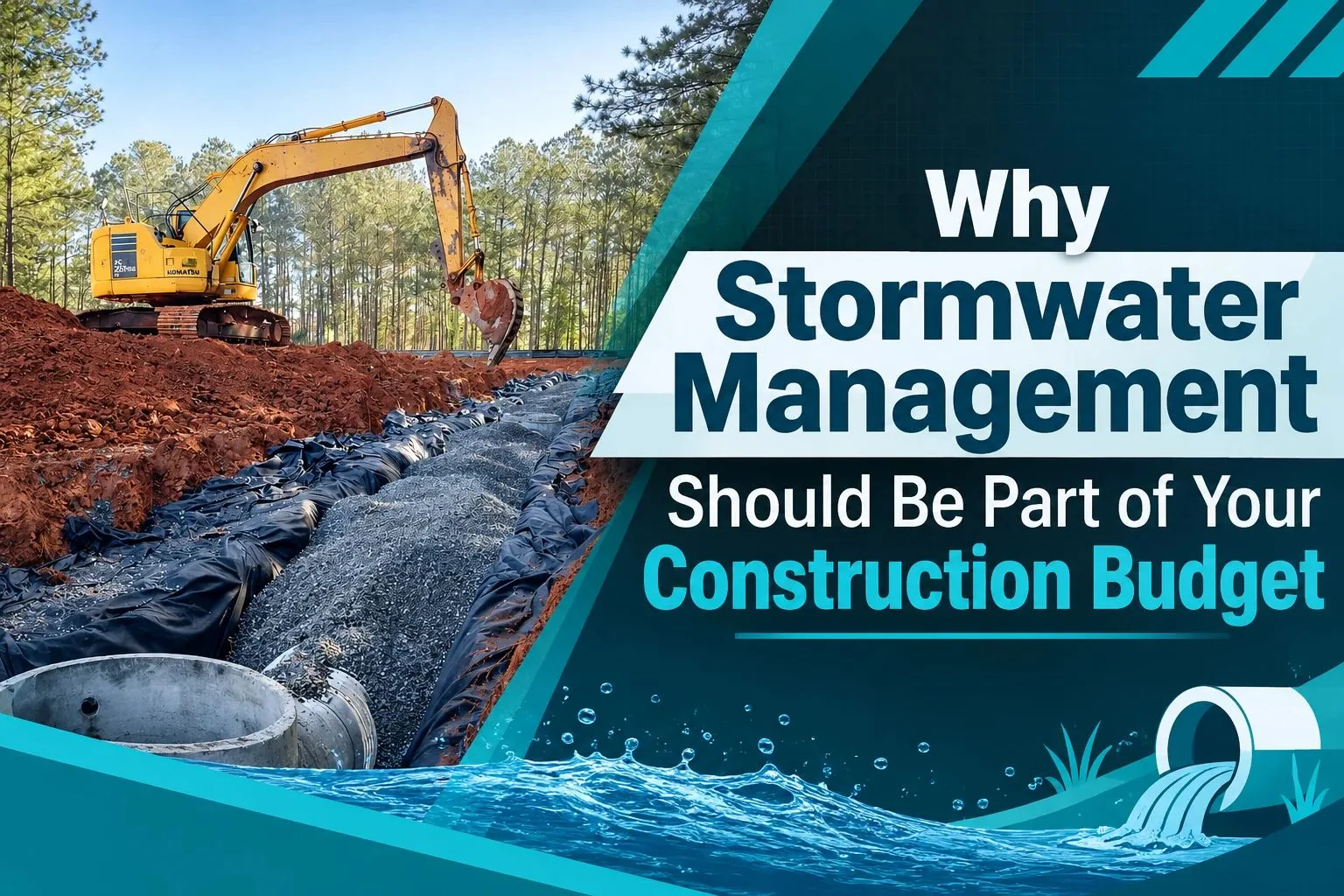
Why Stormwater Management Should Be Part of Your Construction Budget
Highlights:
- If rainfall is not managed, it can collect and flow across the construction site.
- Stormwater control on construction sites is not optional; it is crucial.
- Sustainability is a central pillar of modern building practices.
- Effective stormwater controls contribute to green building standards.
- Sediment-laden water can create long-term damage to downstream environments.
When it rains, water does not simply vanish. It flows. Generally, water is absorbed by the soil and gradually enters groundwater systems. But for construction sites, stormwater can become a serious hazard. That is where professional stormwater management can make a significant difference. It can reduce pollution, erosion, and property damage. On construction sites, the need for effective stormwater control is even more crucial. Let’s learn why!
Top Reasons To Consider Professional Stormwater Management For Construction Sites
Prevents Soil Erosion and Sediment Runoff
Soil erosion is one of the biggest issues with unmanaged stormwater on a construction site. When rain falls, especially on sloped or cleared areas, it can quickly wash soil away. When there is no vegetation or stabilizing measures, even a light rain can cause significant soil loss. Plus, sediment can disrupt ecosystems and introduce harmful substances. Sediment-laden water can create long-term damage to downstream environments. Erosion control measures are essential to preventing these harmful outcomes.
Protects Local Water Quality
Construction sites involve fuel, oil, concrete washout, paints, solvents, and debris. When it rains, these pollutants can be swept into nearby storm drains. This can flow directly into local waterways without filtration. This runoff can create a serious risk to drinking water sources and public health. Contaminants can alter pH levels and introduce toxins to streams and lakes. To protect water quality, installing barriers, covering materials, and properly storing chemicals are essential.
Reduces Flooding and Site Damage
If rainfall is not managed, it can collect and flow across the construction site. Without proper drainage and grading, water can pool in work zones. It can create flooding, damage foundations, and delay critical operations. Uncontrolled water can also undermine roads, erode infrastructure, and displace construction materials. Proper management is essential to intercept and redirect this water. This can reduce the risk of on-site flooding and water damage.
Ensures Regulatory Compliance
Stormwater control on construction sites is not optional. It is crucial. In the United States, the National Pollutant Discharge Elimination System (NPDES) requires permits for construction activities that disturb one acre or more of land. In Georgia, this permit is administered at the state level by the Georgia Environmental Protection Division (EPD), and local governments in the Atlanta area also require erosion and sediment control plans for land-disturbing activity. Contractors must implement stormwater pollution prevention plans that describe how they reduce runoff and prevent contamination. If you cannot stick with these regulations, it can result in hefty fines, stop-work orders, and reputational damage.
Promotes Sustainable Building Practices
Sustainability is a central pillar of modern building practices. When you invest in managing stormwater, it shows that you care about the environment as well as the job site. It reflects that you commit to minimizing the project’s impact on surrounding ecosystems and communities. Effective stormwater controls contribute to green building standards. Neighbors, regulators, and future clients are more likely to trust contractors who operate transparently and responsibly.
Wrapping Up!
Stormwater control may begin with engineering controls and regulatory checklists, but it plays a crucial role in protecting the environment and ensuring building projects are safe, legal, and resilient. This investment supports construction with healthy landscapes and clean water.
Planning a project in Atlanta or North Georgia? Contact us for effective stormwater solutions for residential and commercial sites. To learn more, read our blog posts.
Leave a Reply