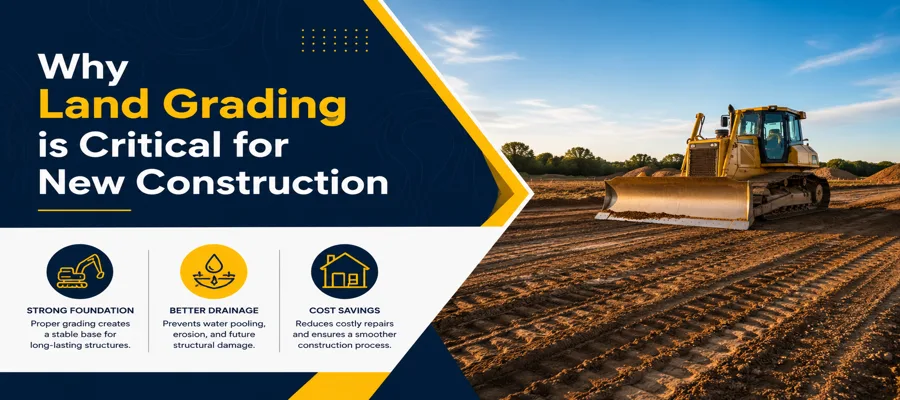
Why Land Grading is Critical for New Construction
Highlights:
- Proper grading can prevent foundation problems that can arise from uneven soil surfaces.
- Flooding is a major concern at construction sites that can cause extensive damage.
- Grading can be tailored to showcase key architectural features.
- Grading methods focus on soil conservation.
Do you know what land grading is? Well, it is a procedure for levelling or sculpting the land surface to prepare it for construction. This process can impact structural integrity, drainage, aesthetic appeal, safety, and project longevity.
Grading can also maintain the environmental balance and long-term viability of the structure. It helps construction projects align with practical and regulatory requirements. This blog explores the importance of grading for new construction.
The Importance of Land Grading in New Construction
Boosting Structural Integrity
Proper grading can prevent foundation problems that can arise from uneven soil surfaces. Grading creates a sturdy base that ensures that the structure will not be vulnerable to sinking or shifting, which can pose long-term risks.
In addition, a properly graded landscape reduces the chances of foundation cracks. Uneven settling can lead to skewed or tilted structures. Grading ensures that buildings remain strong and support structural stability.
Reducing Flood Risks
Flooding is a major concern at construction sites that can cause extensive damage. When the land is well-graded, water can be channeled away from certain areas and reduce the risk of flooding.
Professional land grading contractors calculate appropriate angles and slopes to ensure proper water flow. Properly graded land acts as a preventive measure that ensures that the construction site remains safe and dry during heavy rains.
Enhancing Aesthetic Appeal
Grading can be tailored to showcase key architectural features. As mentioned earlier, it can create specific slopes or terraces. It helps to design elements such as streamlined facades or entranceways.
In addition, a well-graded site offers a well-balanced look that complements architectural designs and the natural environment. When executed correctly, grading can transform integral parts of a property.
Preventing Accidents
Let’s be real! You want to ensure a safe construction site. The grading contractors help you avoid common mistakes and prevent potential risks. They level the ground and grade. This effective approach minimizes the risk of accidents caused by uneven or unstable surfaces.
Safe construction environments protect workers and reduce project delays. You have peace of mind knowing that professionals are operating in secure conditions.
Supporting Soil Conservation
Maintaining soil integrity is essential for construction and also for the environment. Grading methods focus on soil conservation to ensure that existing soil profiles are preserved.
This process involves land manipulation to support construction and protect soil health. In addition, effective grading can prevent soil erosion and loss of topsoil. It can support the ecosystem.
Adhering to Zoning Laws
It is essential to stay in compliance with zoning laws for any construction project. Land grading is no exception. When you use proper grading techniques in the construction project, it can ensure alignment with local regulations of land alteration and construction. With compliance, the constructors maintain good standing with local authorities and continue required development activities.
In a Nutshell!
Land grading is a critical step in the construction process. It offers numerous advantages and prevents many significant issues. It is a fundamental aspect of managing any property that ensures sustainability, safety, and satisfaction.
Leave a Reply