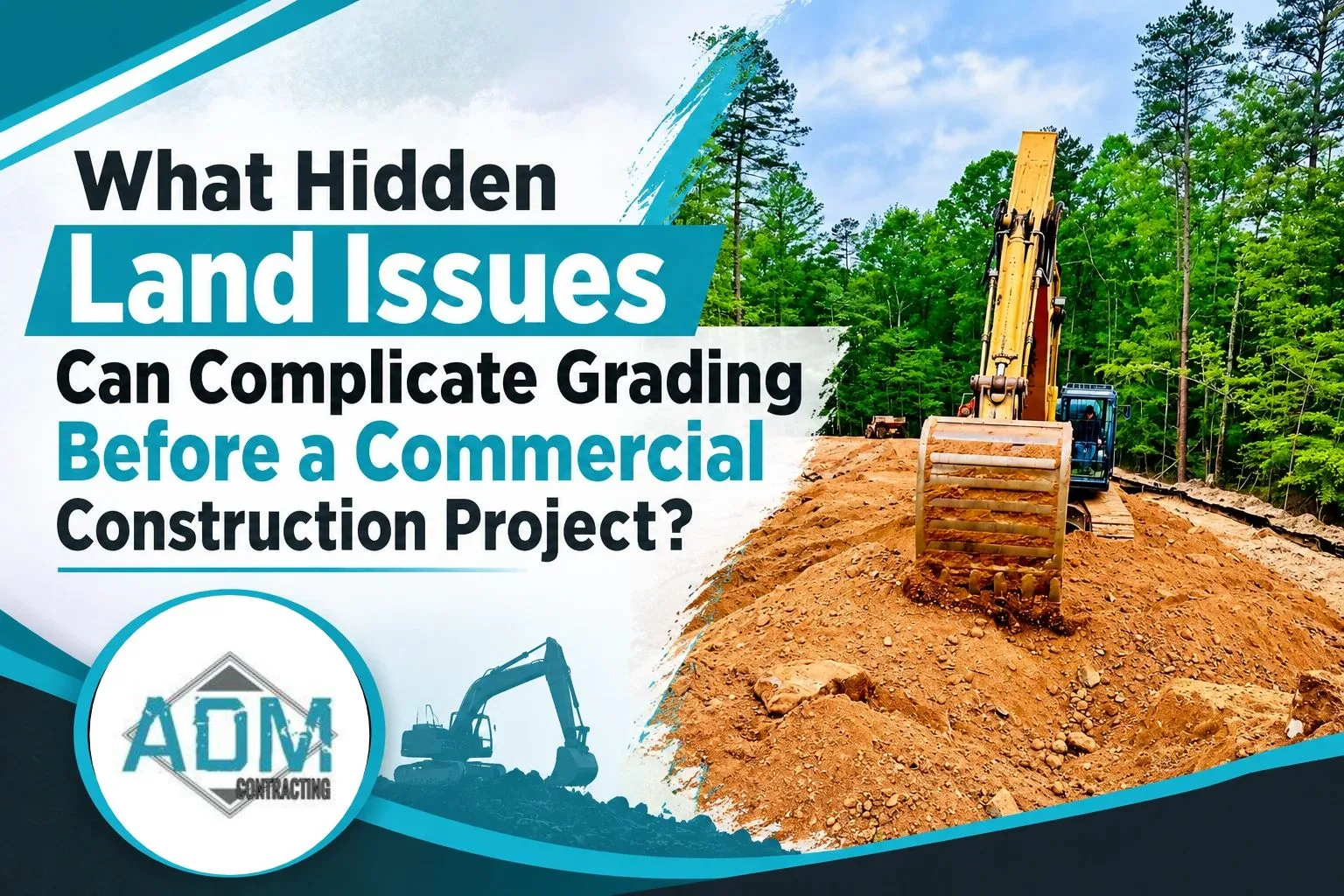
What Hidden Land Issues Can Complicate Grading Before a Commercial Construction Project?
Highlights:
- A commercial site may look construction-ready but still hide unstable soil, loose fill, or poorly compacted ground.
- Poor drainage, standing water, and blocked culverts can affect soil stability and delay construction.
- Buried concrete, timber, old foundations, and construction waste can complicate excavation and ground preparation.
- Hidden wetlands and natural drainage channels may influence construction permissions and grading plans.
- Early involvement of grading professionals helps identify ground conditions before they become costly setbacks.
- Planning grading work around Atlanta’s weather conditions can make site preparation smoother and more manageable.
A commercial plot can look perfectly ready for construction at first glance. The ground may seem firm, the boundaries are clear, and the open space is inviting; it seems like no problem! But actually, it’s not like that. When the first round of excavation begins, there’s a major chance that something unexpected appears beneath the surface. This is where careful commercial grading becomes important. For property owners and developers around Atlanta, hidden ground conditions can affect project schedules, drainage plans, and preparation costs. But working with an experienced grading and excavation company helps bring attention to the details that aren’t always visible at the initial site visit. And getting an idea about these issues matters a lot, too. Let’s now explore this in detail.
Before the First Dig: Hidden Land Challenges That Can Disrupt Commercial Grading
Unstable Soil Beneath the Surface
You might be thinking about starting a construction project and choosing solid land. But wait! Not every patch of land can support a commercial building simply because it looks solid. Some sites contain loose fill, soft soil, or clay-heavy layers that behave differently under pressure. For this reason, before grading work begins, you need to investigate:
- Areas with loose or previously disturbed soil
- Sections where earlier construction may have left poorly compacted fill
- Soil that shifts or settles after every heavy rainfall
These conditions can affect how much soil needs removing, replacing, or compacting. But relax! A grading and excavation expert prepares the ground according to the site’s actual requirements; that’s the whole point.
Water That Has Nowhere to Go
As a construction owner, you don’t need to figure out every drainage issue yourself, but knowing what to look for can make conversations with your grading contractor more productive. Water collecting in low spots, eroded slopes, or blocked culverts can affect soil stability, foundation preparation, and construction schedules. Atlanta’s heavy rainfall can make these problems more noticeable. In this situation, a better option is for the construction owner to schedule the land grading services at an ideal time, like spring, so the work can be done more smoothly and without any worry.
Buried Debris and Old Construction Remains
So, you have decided to develop a commercial project in the land of previously developed properly. But this can hold plenty of surprises. Such as:
- Broken concrete
- Buried timber
- Leftover foundations
- Construction waste may sit beneath the surface
These materials can interfere with excavation equipment and create uneven ground. If they’re left unnoticed, they may also contribute to settlement when the site comes under building or vehicle loads. For this reason, a proper site assessment before grading and excavation means a lot before moving large quantities of earth; that’s all.
Hidden Wetlands and Natural Ground Features
As you might know, some land contains natural drainage channels, wet areas, or wetlands that aren’t immediately obvious during dry weather. And the worst thing is that this can influence where construction is permitted and how the site should be prepared. This is why the right professionals, involved early, can help construction owners make informed decisions, avoid unnecessary ground disturbance, and reduce the risk of unexpected delays or compliance issues.
A successful commercial project begins with understanding the land beneath it. From unstable soil to drainage concerns, early preparation of the site can save trouble later. If you’re planning a development and not sure about your land’s condition, it’s worth taking time to get in touch with grading professionals and discuss your site’s specific needs.
Leave a Reply