How to Prevent Soil Erosion After Culvert Installation in Atlanta
Highlights:
- Ensure the soil around your culvert is properly compacted.
- Always manage water flow at the culvert outlet.
- Focus on proper grading to improve drainage around the installation area.
- Inspect the culvert regularly to identify erosion before it causes costly damage.
Do you know that culvert installation plays an important role in managing water flow around driveways, roads, and properties? However, the job doesn’t end once the culvert is in place. Without proper soil stabilization and drainage planning, flowing water can wash away loose soil and damage the surrounding area. Heavy rainfall can put additional pressure on drainage systems and exposed ground. Relax! A few practical measures can help reduce erosion and protect your property.
Practical Ways to Control Soil Erosion After Culvert Installation
Stabilize the Soil Around the Culvert
Freshly disturbed soil is more vulnerable to erosion, especially during heavy rain. Make sure the soil around the culvert is properly backfilled and compacted. This helps reduce loose areas that water can easily wash away. As a trusted grading and excavation company, we suggest using grass, suitable ground cover, or erosion control blankets to protect exposed soil. Plant roots also help hold the ground together.
Manage Water Flow at the Culvert Outlet
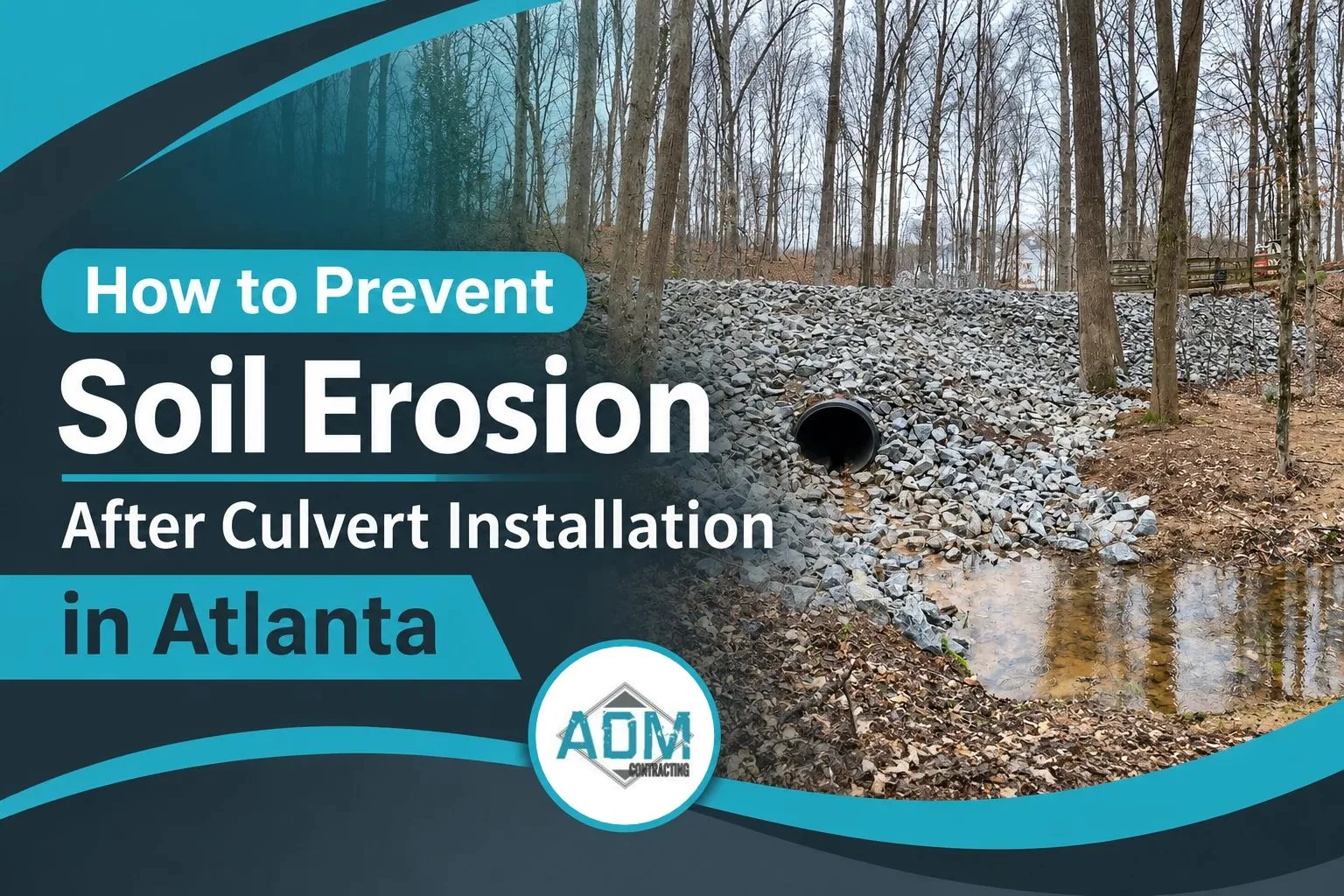
Fast-moving water can remove soil from the culvert outlet and create channels or deep holes. This process, known as scouring, can weaken the surrounding ground over time. Proper outlet protection helps reduce the risk. Options may include a properly designed rock apron, riprap, or another suitable energy-dissipation structure, depending on your site conditions. These measures help spread or slow the water before it reaches vulnerable soil.
Improve Drainage Around the Installation Area
Poor drainage can cause water to collect around a culvert, saturate the soil, and increase erosion. Check the surrounding ground to ensure water follows its intended drainage path rather than flowing across the driveway or toward nearby structures. Proper grading can help direct runoff toward a suitable outlet. Avoid creating steep, exposed slopes that allow water to gain speed.
Inspect the Culvert After Heavy Rainfall
Regular inspections help you identify erosion before it causes serious damage. Look for exposed soil, small gullies, displaced rocks, stagnant water, or sediment build-up near the culvert opening. Pay particular attention to the outlet and the surrounding slopes. Keep the culvert opening clear of leaves and debris. However, avoid entering the pipe or working near fast-flowing water. Seek professional help if the ground becomes unstable or the culvert appears damaged.
Preventing soil erosion after installing a new culvert requires more than simply filling the surrounding ground. Soil stabilization, effective outlet protection, proper grading, and regular inspections all contribute to better drainage performance. Reach out to our experts if you find any issues.
Leave a Reply