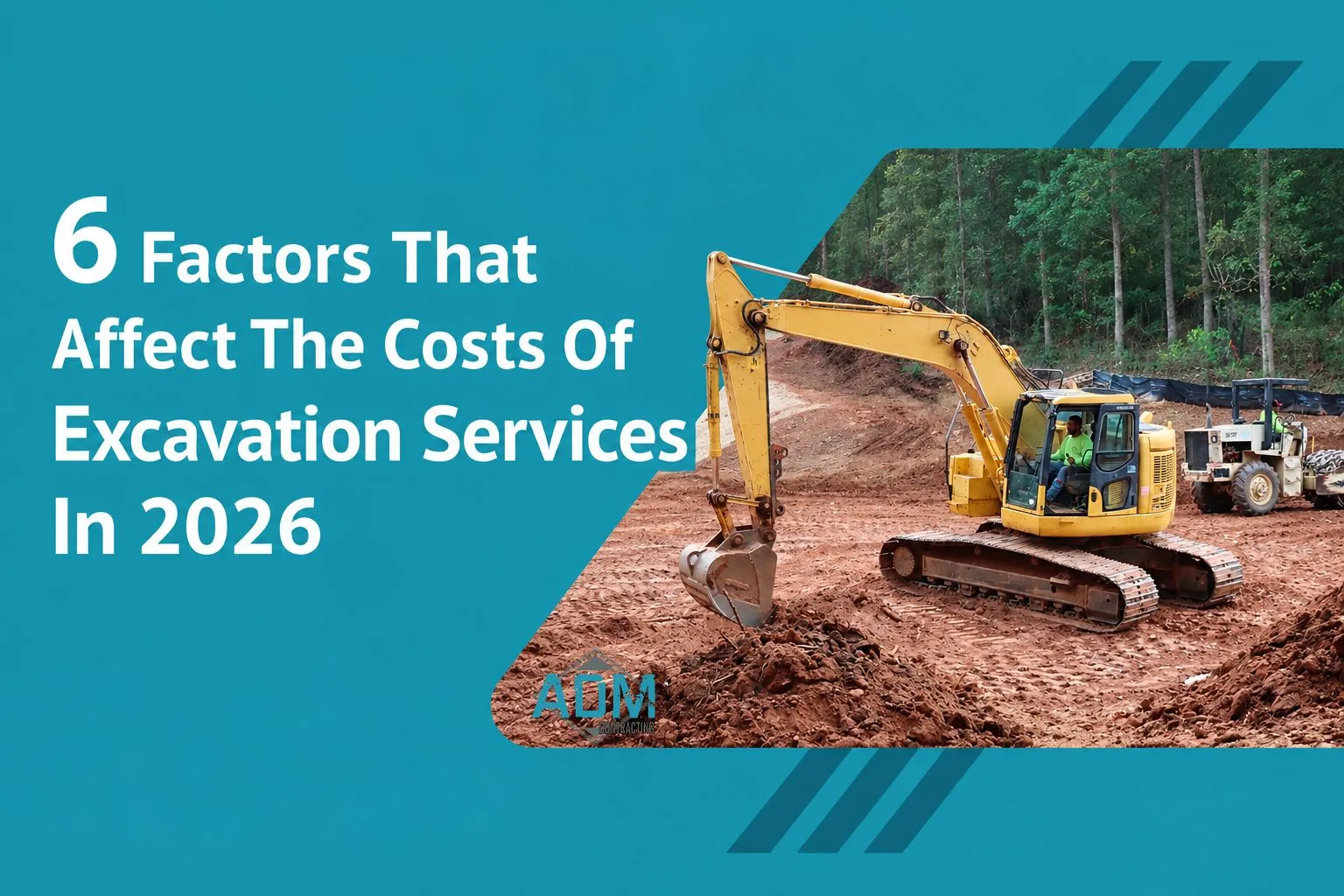
6 Factors That Affect The Costs Of Excavation Services In 2026
Highlights:
- Large excavators and hauling equipment need sufficient space to move.
- With excavation, your property often needs other site preparation work.
- Excavation may require excavators, skid steers, bulldozers, dump trucks, trenching equipment, or other machinery.
- Large excavators and hauling equipment need sufficient space to move.
Hey! Are you planning a construction project in 2026? The first question that comes to mind is: How much will excavation cost? Actually, there is no one-size-fits-all price for excavation services. Every property has different soil, terrain, access conditions, and project requirements. So, the price can differ. However, it is essential to understand what drives the price. Through this approach, you can plan your budget and avoid surprises. This guide explores the major factors that can affect the cost of excavation in 2026. Let’s dive in!
What Impacts The Cost Of Excavation Services In 2026
1. Project Size and Excavation Depth
It is simple: more dirt means more work. For example, a small residential trench for utilities does not require much time, equipment, or labor. On the other hand, excavating an entire foundation can take more time, more labour, and more equipment. The depth also matters. Deeper excavation may require larger equipment and additional safety precautions. This means that if excavation becomes more complex, you need to pay more.
2. Soil and Ground Conditions
Not all ground and soil conditions are the same. These can also impact excavation costs. If there is loose, sandy soil, it can be relatively easy to excavate. However, dense clay, rocky ground, buried debris, or other difficult materials can require specialized equipment and additional labor, increasing the project costs. Contractors may need specialized attachments or additional methods to safely remove the material.
3. Site Accessibility
Can excavation equipment easily reach the site? If your answer is yes, your project can be more efficient. But if the property has narrow driveways, steep slopes, tight spaces, existing structures, or limited access, the excavation company may cost more. Large excavators and hauling equipment need sufficient space to move. When access is restricted, contractors may need additional equipment or alternative work methods.
4. Amount of Dirt and Material Removal
Digging is only half the job. What happens to all that excavated material? The contractors can use the soil on-site, or they can transport and dispose of excess dirt, rock, or debris at an appropriate location. The amount of material removed and the distance to the disposal location can affect the overall price. If your project produces a significant amount of excess material, it can increase the excavation budget.
5. Grading, Drainage, and Site Preparation
With excavation, your property often needs other site preparation work. Your project may require grading, drainage improvements, erosion control, or stormwater management. These additional services can affect the total project cost. But these services, along with excavation, can help you avoid foundation issues. For example, proper drainage can reduce the risk of standing water and future property damage.
6. Equipment, Labor, and Project Timeline
Excavation may require excavators, skid steers, bulldozers, dump trucks, trenching equipment, or other machinery. If more equipment and labor are needed, the project can cost more. Plus, time can also impact the cost. Unexpected delays, difficult soil, utility conflicts, or site conditions can affect the timeline.
Build Your Budget With Confidence!
So, you have understood the most common factors that can impact the excavation price. So, before embarking on the project, ask what is involved in doing the job correctly. You can create a clearer budget.
Leave a Reply